Compare two used cars with our car comparison
Comparing by reg is the quickest way to weigh up two cars you're thinking of buying. Our tool reads each car's MOT records from the DVSA and puts them in one table, so the differences jump out straight away. For each car you'll see:
| Make and model | Fuel type and engine size |
| Colour | Date first registered |
| MOT status and expiry date | Number of MOT tests |
| MOT fails | Last recorded mileage |
| Average miles a year | Any mileage drops |
| Advisories at the last MOT | Problems that keep coming back |
| ULEZ estimate | A link to each car's full check |
Most comparison tools stop at the basics, such as age, engine size and tax. We add the lines that actually separate two similar cars: mileage drops, repeat problems and how hard each car has worked.
How to compare car to car by reg
- Get the reg for each car. Most adverts on Auto Trader, eBay and Facebook Marketplace show it in the photos. If not, ask the seller.
- Enter one reg in each box at the top of this page and press Compare cars.
- Look down the table for the green marks, then open the full check on each car to read the tester's notes.
It works for any car, van or motorbike with an MOT record. You can run as many comparisons as you like.
Reading your vehicle comparison
- Green marks the better figure on each line, such as fewer fails, lower miles a year or no mileage drops.
- The line at the top tells you which car wins on more points. Fuel, colour, engine size and the number of tests aren't scored, as there's no right answer.
- One line can matter more than the rest. A mileage drop with no paperwork to explain it outweighs a newer age or lower miles, so read the whole table before you decide.
Don't be put off by a fail or two on an older car. DVSA figures for 2025 show 27.7% of cars failed their MOT first time, rising to 30% at ten years old. What matters more is whether the same fault keeps coming back.
An example result
Here's what a comparison of two similar hatchbacks at the same price might look like. The green figures are the ones our tool would mark as better.
| Detail | Car 1 | Car 2 |
|---|---|---|
| First registered | Mar 2016 | Jun 2018 |
| MOT fails | 1 | 0 |
| Last recorded mileage | 71,400 | 39,200 |
| Mileage drops | None | 1 |
| Advisories at last MOT | 2 | 1 |
| Problems that keep coming back | None | None |
Car 2 wins on four of five scored lines here, but it's the one we'd ask more questions about. Its mileage went down between two tests, which can mean a tester's typing error or a clocked car. If the seller has a receipt for a new dashboard, or the next MOT puts the reading back on track, it's fine. If not, Car 1's steady record makes it the safer buy.
Where the data comes from
Everything in the table comes from the DVSA's MOT history service, the same records you can view on GOV.UK. They cover every MOT in Great Britain since 2005 and in Northern Ireland since 2017, and each new test appears soon after the tester logs it.
The mileage is the reading the tester took at each MOT. The ULEZ line is an estimate based on fuel type and age. For a closer look at one car's London charges, our ULEZ checker explains the result in more detail.
What the comparison doesn't include
Some records aren't public, so no free tool can show them. Ours doesn't include:
- Outstanding finance
- Insurance write-off records
- Stolen markers or plate changes
- The number of previous owners
- Service history or a valuation
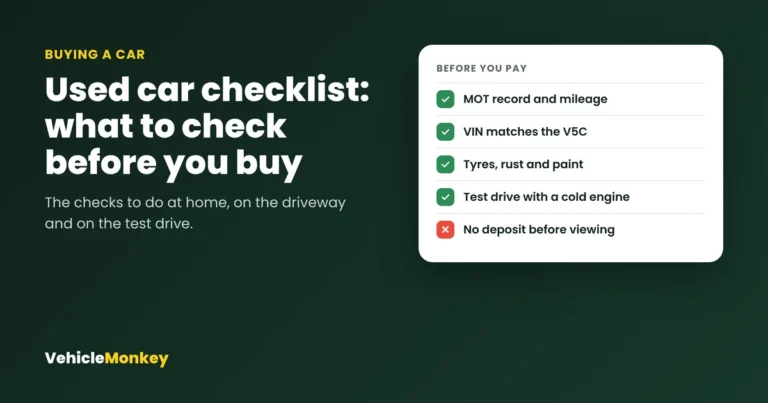
Once you've picked the stronger car, a paid history check on that one usually costs around £10 to £20. Then see it in person with a used car checklist and a proper test drive.
Frequently asked questions
Is it better to buy an older car with low miles or a newer one with high miles?
It depends on how the car covered those miles. A newer car with high motorway mileage often has less wear than an older car that only did short trips, which are hard on the clutch, battery and exhaust. Compare the MOT fails and repeat problems as well as the mileage.
Is the comparison free?
Yes. You can compare any two UK regs as often as you like, with no sign up and no charge. We only point you to paid checks for finance, write-off and theft records, which aren't public.
How accurate is the comparison?
Every figure comes straight from the DVSA's MOT records, so it's as accurate as what the testers logged. Now and then a tester types a mileage in wrong, which can show up as a drop. If you see one, ask the seller about it before you rule the car out.
Why does it say n/a for some lines?
Usually because the car hasn't had an MOT yet. Most cars don't need one until they're three years old, so there's no mileage or test history to compare. You'll still see the basic details, such as the make, model and first registration date.
Where does the mileage come from?
The MOT tester reads the mileage off the dashboard at every test and logs it with the DVSA. We show the latest reading and work out the miles a year from the date the car was first registered.